It is one of the most common Wolf calls we take in Piedmont: the surface burners light and cook like normal, but the oven stays stone cold. The owner's first thought is almost always a failed control board — and on a Wolf dual-fuel range tucked into a 1920s Tudor or Mediterranean kitchen, that is usually the wrong first place to look.
The reason is in how the range is wired, and in how Piedmont's housing stock was built.
Two power systems in one appliance
A Wolf dual-fuel range runs the cooktop burners on gas and the oven cavity on a 240-volt electric feed. Because those are two separate systems, losing the oven alone — while the burners keep working — points away from the gas side entirely and toward the electric supply or the oven's own circuit.
That single fact saves a lot of guessing. When only the oven is dead, the gas valves, igniters and surface controls are demonstrably fine, so the fault almost always lives in the 240V path.
Why Piedmont homes make this worse
Many Piedmont kitchens were never laid out around a 60-amp built-in range. When a Wolf gets retrofitted into a Craftsman or Tudor estate, it often lands on original wiring: an undersized branch circuit, a corroded lug at the panel, or a weak 240V leg that an aging service can no longer hold under load.
The oven draws hard the moment it tries to preheat, and that is exactly when a tired feed sags. The board reads low or unbalanced voltage and simply won't bring the bake element up to temperature — even though nothing inside the range has actually failed.
How we diagnose it the right way
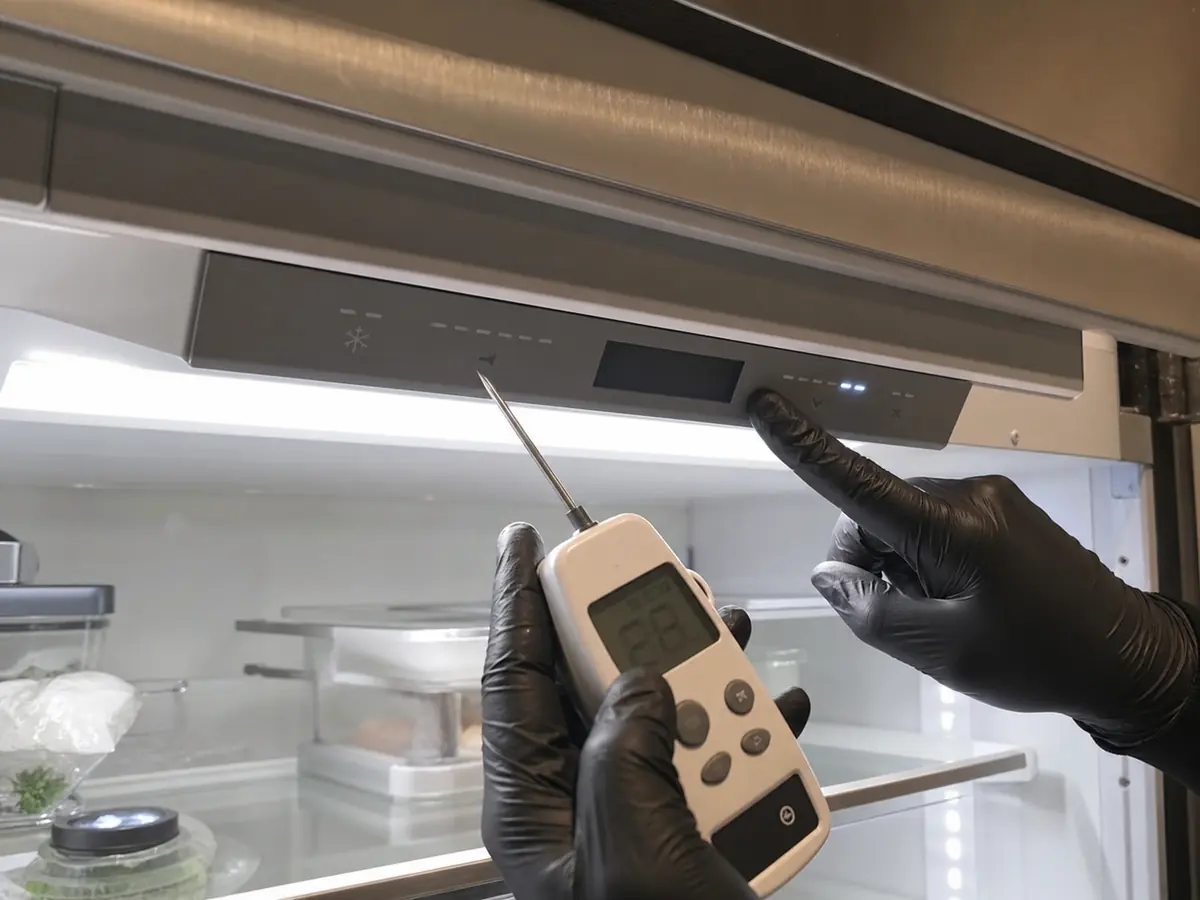
We meter the power at the unit before we open anything. Both 120V legs are checked under load, the lugs and connections at the panel are inspected, and only once we have confirmed clean, balanced 240V do we look at the relay board or the bake element.
That order matters. Condemning a control board on a hunch means an expensive part that doesn't fix the problem — because the real culprit was upstream in the house, not inside the Wolf.