
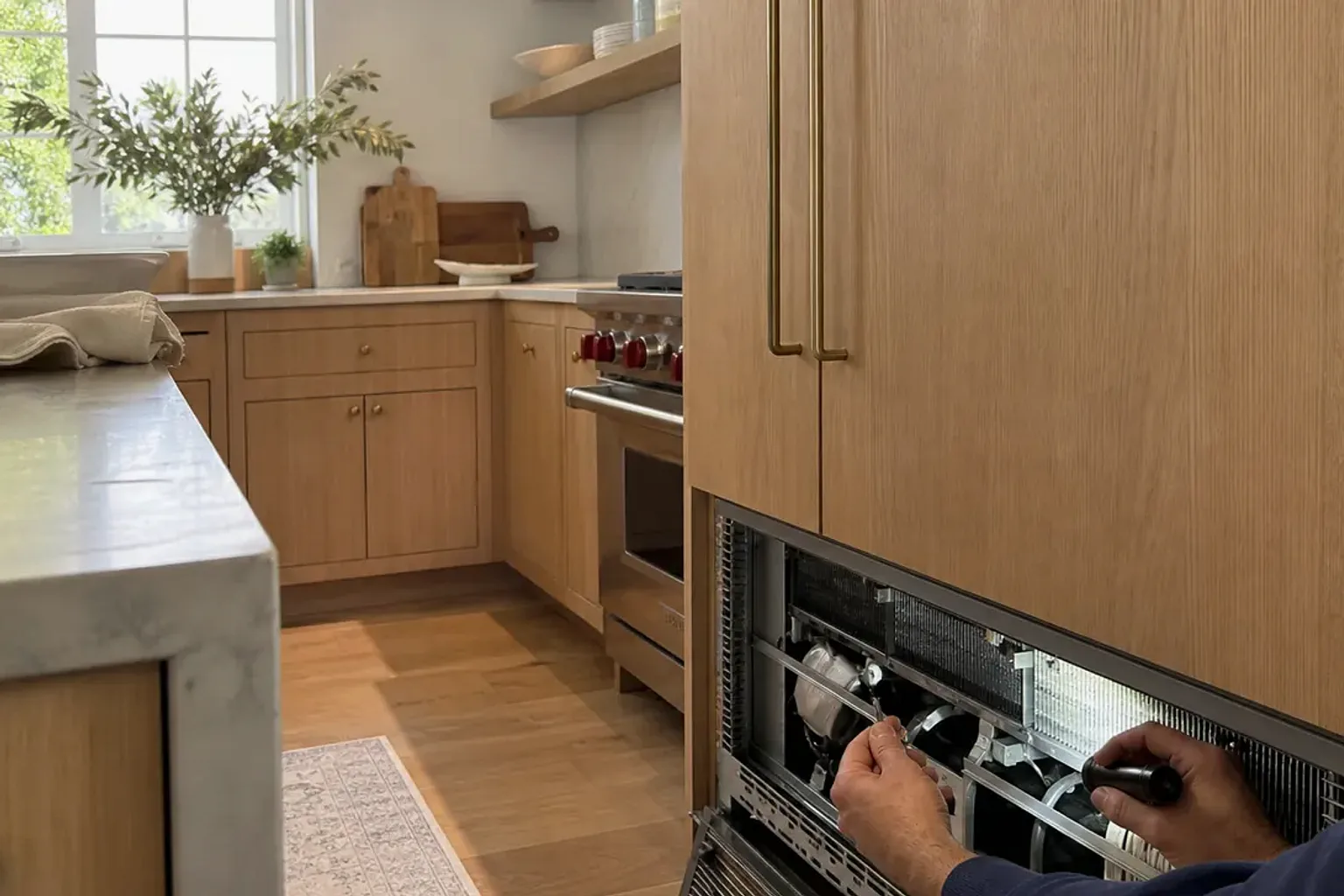
When a built-in Sub-Zero starts running warm in a Piedmont kitchen, the first fear is usually a dying compressor or a sealed-system leak. More often the real trouble is far simpler and cheaper: a condenser coil that has gone past its 6-month cleaning interval and can no longer breathe. The refrigerator dumps its heat through a coil behind the top grille, and when airflow to that coil is choked, the unit runs hot, cycles constantly, and struggles to recover after the door is opened.
That matters more here than in most towns. Piedmont's 1920s Tudor and Mediterranean estates were never designed around a modern built-in, so these units are carved into tight cabinetry that starves the condenser of air. This guide covers how the cooling works, the warning signs, and the maintenance that keeps a built-in from overheating.
How a Built-In Sheds Its Heat
Unlike a freestanding refrigerator that vents from the back, a Sub-Zero built-in pulls room air in and pushes warm air out through the grille at the top of the unit. Behind that grille sit the condenser coil and a fan. As refrigerant carries heat away from the compartments, the coil releases it into the air, and the fan moves that hot exhaust out of the cabinet.
The design depends on a steady exchange of room air across the coil. If fresh air cannot reach the grille, or the warm exhaust has nowhere to escape, the coil stays hot, the refrigerant cannot condense properly, and every part of the system works harder for less cooling.
Why Piedmont's Carved-In Cabinetry Chokes the Condenser
Most of the overheating calls we take in Piedmont trace back to the way these units were installed. When a grand old kitchen on Crocker Highlands or above Trestle Glen was retrofitted for a large built-in, the opening was often cut tight enough to look seamless, with trim and paneling framing the grille.
That craftsmanship looks beautiful and works against the appliance. A valance that hangs too low, a filler panel pressed against the top vent, or a soffit that traps rising exhaust all reduce the airflow the condenser needs. A unit can be mechanically flawless and still overheat simply because it is boxed in too tightly.
The Warning Signs Your Condenser Cannot Keep Up
The clearest sign is a unit that runs almost without stopping yet never feels quite cold enough, especially on the freezer side. You may notice the cabinet sides feeling unusually warm, or ice cream turning soft while fresh food still holds. After a long door cycle at a dinner party, the unit is slow to pull back down to temperature.
Another tell is a condenser that clogs again quickly after a cleaning. In hillside homes with pets or construction dust nearby, a smothered coil traps grime fast, so the interval between problems keeps shrinking until the airflow is corrected.
Cleaning the Condenser and Keeping Clearances
Sub-Zero designs the condenser to be cleaned, and on most built-ins it is the most valuable maintenance an owner can do. Behind the top grille the coil collects a felt of dust that acts like a blanket, and the maker suggests clearing it every six months, more often in a dusty or pet-friendly home. With the unit powered down, remove the grille and vacuum the coil and fan blades with a soft brush.
Cleaning only helps if the air has somewhere to go. The unit needs open space around the grille and above the cabinet so exhaust can leave, and in a carved-in kitchen those gaps are the first thing sacrificed for a flush look. Never store items on top of the unit or against the vent.
When It Is No Longer Just Airflow
If the condenser is spotless, the clearances are correct, and the unit still overheats, the problem has usually moved into the sealed system or the electronics. A failing condenser fan motor, a weak compressor, or a refrigerant issue produces the same warm-cabinet symptoms, and no amount of cleaning will resolve those.
Here a proper diagnosis matters, because chasing airflow on a sealed-system fault wastes time and money. We confirm the coil and fan are doing their job first, then measure the system itself, so you are not paying for guesswork on a major repair.
What We Check on a Piedmont Service Call
When we come out, we start at the grille: we pull it, inspect and clean the condenser and fan, and check the clearances the cabinetry actually allows. Only after confirming the unit can breathe do we test the fan motor, compressor, and temperatures to see whether the sealed system is truly involved.
As an independent Sub-Zero repair company, we work on built-in, integrated, and panel-ready units throughout Piedmont and the surrounding East Bay hills. We carry common fan motors and parts on the van, so an airflow problem is usually diagnosed and corrected on the same visit.