
Piedmont is a small city ringed entirely by Oakland, and its kitchens have a recognizable character: Tudor, Mediterranean and Craftsman homes on hilly lots, most of them remodeled around high-end built-ins that the original floor plan never anticipated.
That profile — old houses, tight retrofits, East Bay damp — produces a fairly predictable set of service calls. Here is what we actually see most across town, from the estates near Piedmont Park and the Civic Center to the upper streets along the Oakland hills line.
Tight retrofits stress the install
Most Piedmont built-ins live in openings that were carved into existing cabinetry rather than designed for them. Clearances are slim, airflow around the condenser is marginal, and a Sub-Zero that can't breathe runs its compressor longer and warmer than it should.
The same tightness shows up on the cooking side. A Wolf range squeezed into a vintage surround sits close to original finishes, so we read the installation before we touch the appliance and work carefully around the millwork.
Old foundations move, and cabinetry moves with them
Piedmont's hilly lots and decades-old foundations shift slowly over time, and that movement can rack the cabinetry around an appliance just enough to bind a self-clean latch, stress an oven hinge, or pull a built-in slightly out of square with its opening. When a door stops sealing cleanly or a latch starts to catch, the cause is often the house moving, not the appliance failing.
East Bay damp and original wiring
Damp settles into the door line, and a gasket that sealed perfectly in spring can start to sweat by late summer — a tired gasket is one of the most common reasons a fridge here runs harder than it should. On the electrical side, original panels and undersized branch circuits in these older homes mean a half-dead Wolf range is far more often a weak 240V feed than a failed board. We meter the supply before condemning anything.
Getting ahead of it
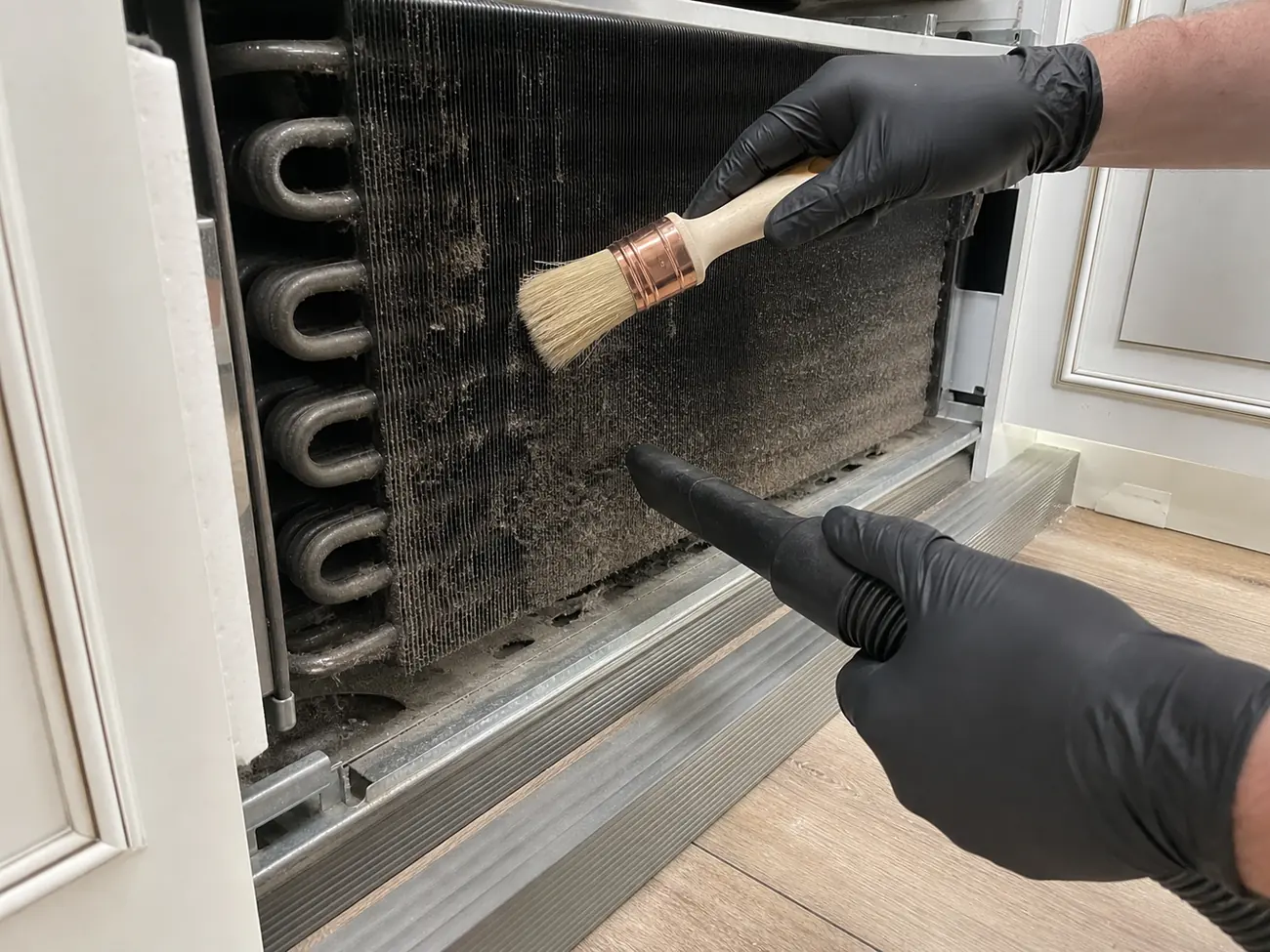
An annual condenser cleaning and a gasket check is the single highest-value thing an owner can do, especially on a tightly retrofitted built-in that can't shed heat freely. It keeps the compressor cool, catches a sweating gasket before it frosts, and heads off the sealed-system repair that a neglected coil eventually invites.